
 By
By Food and beverage facilities face unique flooring challenges. Constant moisture, heavy equipment, chemical cleaners, and foot traffic take a serious toll on floors. In New Jersey, business owners are increasingly turning to epoxy flooring systems to meet these demands.
Here are the top benefits of choosing epoxy for your commercial kitchen epoxy flooring or food processing facility.
Unmatched Durability
Built to Handle Industrial Demands
Commercial kitchens are brutal environments. Heavy equipment, rolling carts, dropped utensils, and constant activity put enormous stress on floors. Epoxy coatings cure into an extremely hard surface that resists impact, abrasion, and heavy loads.
Unlike vinyl or tile that chips and cracks under pressure, epoxy remains stable and intact under the most demanding conditions.
Longer Lifespan Means Lower Replacement Costs
A properly installed epoxy floor can last many years with minimal maintenance. This longevity dramatically reduces the total cost of ownership compared to flooring materials that need frequent repairs or replacement.
Superior Hygiene Performance
Non-Porous Surface Stops Bacterial Growth
Bacteria need moisture and surface irregularities to thrive. Epoxy’s non-porous, seamless surface removes both of those conditions. This makes it one of the most hygienic flooring choices available for food production environments.
Quick and Thorough Cleaning
Because there are no joints or grout lines, cleaning an epoxy floor is fast and complete. A single pass with a mop removes spills, grease, and food residue effectively. This reduces cleaning time and chemical use while delivering better sanitation results.
Regulatory Compliance Made Easy
FDA and USDA Approved Systems
Professional commercial kitchen epoxy flooring NJ installations use materials specifically formulated to meet FDA and USDA requirements. This compliance is essential for food businesses that undergo regular inspections and audits.
Better Audit Scores Support Business Growth
Third-party auditors assess your facility’s ability to maintain food safety standards. A clean, seamless epoxy floor signals professionalism and hygiene discipline. Better audit scores can help your business land contracts with larger retailers and distributors.
Improved Workplace Safety
Anti-Slip Options Reduce Injuries
Wet kitchen floors are a constant safety concern. Epoxy systems can be applied with anti-slip aggregates that improve traction, even when the floor is wet or greasy. This reduces slip-and-fall incidents and protects your employees.
Bright Surfaces Improve Visibility
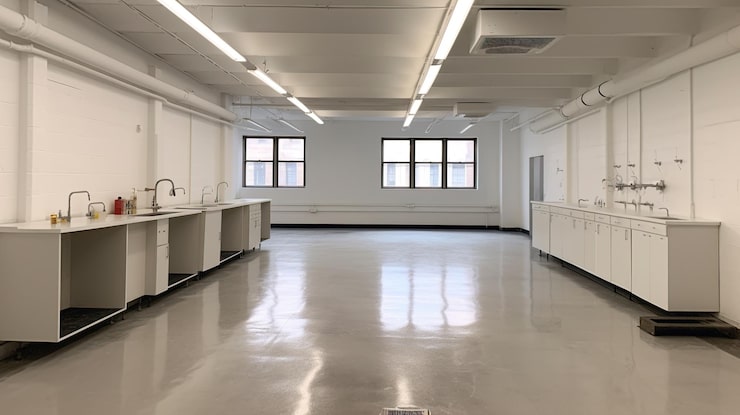
Light-colored or high-gloss epoxy floors reflect light effectively. Better visibility in a kitchen helps staff spot spills, dropped equipment, or potential hazards more quickly. A brighter floor is a safer floor.
Flexible Installation Scheduling
Minimal Business Disruption
Professional NJ installers understand that downtime is expensive. Most operations offer flexible installation windows, including evenings, weekends, and overnight shifts. This means your kitchen can be back in operation with minimal disruption to your schedule.
Fast Cure Times with Modern Systems
Modern epoxy formulations cure faster than older systems. Some installations allow foot traffic within 24 hours and full operational use within a few days. Fast turnaround protects your revenue stream during installation.
Wide Coverage Across New Jersey
Serving All of NJ and Beyond
Whether your facility is in the northern, central, or southern parts of New Jersey, professional epoxy contractors service the entire state. Teams also extend service to Pennsylvania and New York for large-scale projects.
Conclusion
The benefits of epoxy flooring for commercial kitchens go far beyond aesthetics. Durability, hygiene, compliance, safety, and flexible installation make it the most practical flooring investment a food business can make. If you operate in New Jersey, choosing a locally experienced installer ensures you get a system tailored to your facility’s exact needs.


