By
By There’s a moment every kitchen manager dreads. You’re walking the floor during a health inspection and the inspector crouches down to look at the grout lines between your tiles. Old grout harbors bacteria. It stains permanently. It cracks under thermal stress and becomes a trip hazard. If you’ve been dealing with that scenario, you’re not alone. It’s one of the most common reasons food service operators in New Jersey start researching commercial kitchen flooring alternatives seriously.
What’s Actually Wrong With Kitchen Tile?
Tile itself isn’t necessarily a bad material. The problem is the mortar joints between tiles, and what happens to them over years of commercial kitchen use. Grout absorbs grease, food particles, and cleaning chemicals. It cracks under the thermal stress of hot liquids hitting cold surfaces. Once a grout joint cracks, it creates a pocket where bacteria thrive, moisture collects, and the structural integrity of the floor begins to break down from below.
Maintaining tile in a commercial kitchen means constant regrouting, regular scrubbing of joints with specialized brushes, and eventually dealing with tiles that shift or crack because the substrate beneath them has been compromised by moisture intrusion. That maintenance cycle is expensive in both time and money. It also creates ongoing health code concerns that a seamless flooring system eliminates entirely.
How Does Epoxy Go Over Existing Tile?
This is where the chemistry of epoxy flooring becomes genuinely impressive. When old tile has its baked-on glaze removed, the clay base underneath is exposed. That clay base shares the same thermal expansion coefficient as concrete. In practical terms, that means the epoxy resin and the tile expand and contract at the same rate with temperature changes. The result is a bond that doesn’t crack or separate even under the thermal stress that commercial kitchens generate constantly.
HPS Flooring removes the glaze using their 800-pound diamond grinding equipment. The weight of the machine creates the downward pressure needed to achieve a thorough, consistent surface profile across the entire floor. Their HEPA vacuum systems capture every particle of dust and debris during this process, ensuring the tile surface is completely free of bond inhibitors before the resin application begins. No primer is needed when the surface is properly prepared this way.
What Happens After Surface Preparation?
Once the tile surface is prepared and confirmed free of any contaminants, the installation moves into the application phase. HPS Flooring applies a urethane slurry system directly to the prepared surface. Broadcast aggregate is incorporated at this stage to create the slip-resistant texture that commercial kitchens require for staff safety. That aggregate becomes part of the flooring system itself, not a surface treatment that wears away over time.
After the slurry cures, the chemical resin topcoat goes down. This topcoat is the layer that provides the floor’s chemical resistance, seamless surface, and long-term durability. It’s formulated specifically to withstand the grease, oils, hot liquids, and harsh sanitizing chemicals that define daily life in a professional kitchen. The finished surface has no joints, no seams, and no places for bacteria to hide.
Is the Result Actually More Durable Than New Tile?
In most commercial kitchen environments, yes. New tile with properly installed grout will still develop the same problems over time that old tile already has. The grout joints remain a vulnerability regardless of how fresh they are. Epoxy over properly prepared tile eliminates those joints entirely, creating a surface that’s stronger than either the tile or the epoxy would be on their own because they’re thermally bonded together.
For kitchens in New Jersey looking specifically at commercial kitchen flooring NJ options that offer genuine long-term value, the math on epoxy versus tile is pretty clear. Epoxy systems from professional installers like HPS Flooring typically outlast tile with grout joints by a significant margin while requiring far less maintenance over that lifetime.
What Does the Finished Floor Feel Like to Work On?
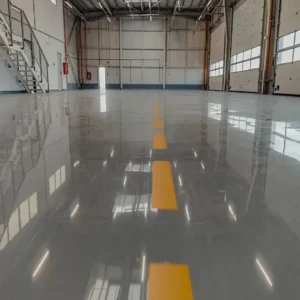
This question matters to the people who actually stand on the floor all day. Kitchen staff notice the difference between a hard, unforgiving tile surface and an epoxy floor that incorporates a slight texture from the broadcast aggregate. The texture improves grip, which reduces fatigue from foot slip correction over long shifts. The seamless nature of the surface also makes it easier to move wheeled equipment and carts without catching on grout lines or cracked tile edges.
Cleaning is faster because there are no joints to scrub. Mops glide across the surface without getting caught on grout ridges or chipped tile edges. Spills wipe up quickly because the non-porous surface doesn’t absorb liquids. For kitchen staff who spend their entire shift on that floor, a properly installed epoxy system makes a real, noticeable difference in their daily work environment.
Why Choose HPS Flooring for This Project?
HPS Flooring has been installing epoxy systems in commercial kitchens since 1988. That’s over 37 years of working exclusively with commercial and industrial food service facilities across New Jersey, New York, and Pennsylvania. They don’t take residential kitchen projects or garage floor jobs. Their entire operation is built around the specific demands of professional food service environments, and that focus shows in the quality of their installations.
Their free, no-pressure consultation gives kitchen operators a clear assessment of their specific floor before any commitment is required. Every project is evaluated on its own circumstances because no two kitchens are exactly alike.
Conclusion
Old tile with crumbling grout joints isn’t just an aesthetic problem in a commercial kitchen. It’s a sanitation risk, a safety hazard, and a maintenance burden that compounds over time. Epoxy flooring applied over properly prepared tile eliminates every one of those problems with a system that’s seamless, slip resistant, chemically durable, and built to last for decades. For New Jersey food service operators ready to stop fighting their floors, a professional epoxy installation is the solution that makes every other floor problem disappear.
FAQ
Do I need to remove old tile before installing epoxy in my kitchen? Not necessarily. HPS Flooring can apply epoxy over existing tile by removing the glazed surface and exposing the clay base, which bonds effectively with the epoxy resin.
How does epoxy compare to tile for long-term maintenance costs? Epoxy requires significantly less maintenance than tile with grout joints. There’s no regrouting, no joint scrubbing, and no bacterial buildup in seams because the surface is completely seamless.
Is HPS Flooring available for commercial kitchens throughout NJ? Yes. HPS Flooring serves commercial and industrial food service facilities throughout New Jersey, including Montclair, Morristown, Asbury Park, and Red Bank, among other areas.