
 By
By Before any structural support goes into the ground, drilling has to happen first. It’s easy to overlook this early phase of a commercial project, but the quality and precision of drilling work often determines how well everything built afterward actually performs. Soldier piles, anchors, and foundation elements all depend on drilling that’s done correctly from the very start.
Seiscore is a specialty shoring and structural contractor that self performs drilling, shoring, structural, and concrete work for commercial general contractors. Having drilling handled directly, rather than passed off to a separate subcontractor, keeps this critical first step tightly connected to everything that follows.
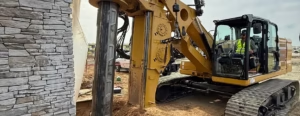
What Drilling Accomplishes on a Shoring Project
Drilling creates the openings needed for piles, anchors, and other structural elements that will eventually support a building or retain surrounding soil. For soldier pile wall systems, drilling establishes the vertical shafts where steel piles or beams are placed at regular intervals along an excavation perimeter.
- Establishing precise depths for structural piles
- Creating anchor points for retaining wall systems
- Preparing shafts for foundation support elements
- Accommodating varying soil conditions across a single site
Getting these details right matters enormously, since even small deviations in depth or placement can affect how well the finished structure performs under load.
Drilling Across Different Soil Conditions
Not every site presents the same drilling challenges. Soil composition can shift dramatically across a relatively small area, and a contractor needs to adjust equipment and technique accordingly. Soft, clay like soil behaves very differently under drilling equipment than denser, more compacted ground, and experienced crews know how to read these conditions as work progresses.
This adaptability is part of why self-performed drilling offers a real advantage. When the same team handling excavation also manages the shoring and structural phases that follow, adjustments made during drilling can be communicated and acted on immediately, without waiting on a separate subcontractor to catch up.
Drilling for Soldier Pile Wall Systems
Soldier pile walls remain one of the most common earth retention methods used on commercial sites, largely because they’re versatile and relatively straightforward to install across a range of soil conditions and depths. The process begins with drilling shafts at regular intervals, into which steel piles or beams are placed before the surrounding voids are filled with lagging material such as shotcrete or timber.
Precision during the drilling phase directly affects how well the finished wall performs, since improperly spaced or angled piles can compromise the lateral support the entire system depends on.
How Drilling Connects to Structural Retrofitting
Drilling isn’t limited to new excavation work. It also plays an important role in structural retrofitting, particularly for seismic safety upgrades. Soft story retrofits, which help protect buildings from racking during an earthquake, often require drilling to install new structural connections or reinforcement elements into existing foundations.
This kind of work demands a contractor who understands both the drilling process itself and the broader structural engineering goals behind it, since the two need to work together seamlessly for the retrofit to actually succeed.
Why Self Performing Drilling Reduces Project Risk
When drilling, shoring, structural, and concrete work are all handled by the same contractor, there’s significantly less risk of miscommunication between phases. A crew that drills the shafts and later installs the shoring system understands exactly what conditions were encountered underground, which helps avoid surprises later in the project.
This continuity becomes especially valuable when site conditions differ from what was originally anticipated, which happens more often than most people expect once excavation actually begins.
Licensing Considerations for Drilling and Shoring Work
Given how foundational drilling is to the rest of a shoring or structural project, verifying a contractor’s licensing and insurance is an essential step for any commercial GC. Seiscore holds California Contractor License 1126002, along with insurance coverage tailored for commercial GC contracts, providing a clear standard of accountability from the earliest phase of work.
This verification isn’t just a formality. Drilling work that isn’t properly executed can compromise everything built on top of it, making contractor credentials a genuinely important part of project planning.
Planning Drilling Around Project Timelines
Because drilling typically happens before most other visible construction activity, delays here can quietly extend an entire project schedule. Working with a contractor capable of self performing drilling alongside shoring and structural work helps keep this early phase moving efficiently, without the coordination gaps that often come from managing multiple separate subcontractors.
Final Thoughts
Drilling might not be the most visible part of a commercial construction project, but it lays the literal groundwork for everything that follows. Working with a specialty contractor that self performs drilling alongside shoring, structural, and concrete work provides the continuity and precision needed to keep complex projects on schedule and structurally sound from the very first shaft.
FAQ
Why is drilling considered a critical first step in shoring projects?
Drilling establishes the shafts and anchor points needed for piles and structural elements, and precision at this stage affects how well the finished system performs.
How does soil condition affect the drilling process?
Soil composition varies across sites, and experienced crews adjust equipment and technique to account for differences like soft clay versus denser, compacted ground.
Why does self performing drilling benefit a commercial project?
It reduces miscommunication between phases and allows adjustments to be made immediately when underground conditions differ from what was expected.


