
 By
Commercial kitchen floors deal with wild temperature swings every day. Walk-in freezers sit right next to hot ovens and deep fryers, while dishwashers dump boiling water across floor drains during busy shifts.
Using flooring designed to handle sudden heat spikes keeps your floor from cracking, peeling, or lifting off the ground.
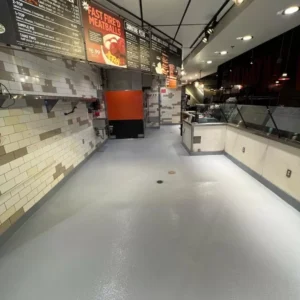
How Thermal Shock Breaks Weak Flooring
When boiling water hits a cold concrete floor, the top surface expands much faster than the cold concrete underneath it. This rapid pull creates heavy pressure right where the top coating connects to the concrete base.
Thin floor paints cannot stretch or flex under this pressure, causing them to bubble and peel off in sheets. Installing thick Epoxy flooring for commercial kitchen systems gives you a layer that expands and cools at the exact same rate as concrete, taking hot spills without cracking.
Protecting Dishwashing and Pot Wash Areas
Dishwashers and pot wash stations take continuous blasts of hot water and soap all day long. Water hits these areas constantly, making them the first place where weak floor paints start to wash away.
Choosing heat-tested commercial kitchen flooring keeps subfloors safe from hot water damage. Strong resin layers stay locked to the concrete even under regular steam cleaning sessions.
Saving Money on Long-Term Floor Repairs
Having to fix cracked floor patches every few months slows down your work and wastes money on temporary fixes. Spending money on quality heat-resistant materials upfront keeps you from dealing with constant patch jobs.
Teaming up with experienced industrial kitchen flooring installers gives you long-lasting results, letting your staff focus on food prep instead of floor maintenance.
Protecting Your Subfloor from Heat Damage
Sudden heat spills can destroy weak floor coatings fast. Using heat-stable resin surfaces protects your concrete subfloor, keeps your kitchen open, and cuts down on unexpected repair costs.


